This is Night Signal. It's the story of a paranormal radio station crew, and the weird shit that happens. This one's got everything.
It's funny, I started off with this really serious high art idea, but then just, sort of went a different direction with it.
Production notes — watch the film before reading.
The music
I have this rule since I started making videos around songs: don’t make a video for anything you aren’t willing to listen to 2500 times or more.
It’s a good rule.
I started making a video for a different song, the one about donuts. But by about 300 listens in, I just couldn’t stand it anymore. So the next step was rummaging through the back catalog. Maybe “Song About Myself,” or “The Little Things” (that one would have been interesting) or “You Knew That Already,” which also had possibilities.
After some meandering, I said fuck it and decided to write something for the task.
First place I went was back to the jam band style from the last video. I like anything jam band or Dead-adjacent. Psychedelic rock and trippy bluegrass are things I was raised on.
But I got six hours into songwriting and realized... shit.
This song is way too specific. I have a very specific type, and everyone I’ve dated over the last five years would think I was writing about them.
I needed plausible deniability.
Yes yes.
After all, I did want to make a video on top of a love song.
First step was switching the song from first person to third person. I like that device, especially in country, where it feels a little out of place inside the usual narrative machinery. A couple artists do it really well.
And then I had ChatGPT mow it down into something a little bit poppier.
The trick with these five-minute videos is redirection and distraction. You have to make it so the viewer doesn’t really notice that the song is five or six minutes long. But for that, you need a pretty specific structure.
Something uncannily familiar, but still new.
Wasn’t enough, though. I was still having trouble.
So then I started thinking about Talking Heads, and a-ha, and The Killers, and The Darkness. And thinking about The Darkness makes me think of Queen, and how much I love male falsetto vocals these days. That whole little cluster of sound.
I knew I was close, but I still wasn’t feeling it.
Then I got sloppy and lost track of which version of the song I was copying and pasting into each tab, because I can’t be bothered to close tabs, especially when Suno is open.
And I ended up pasting an ’80s post-punk synthwave style prompt into a version of the song that still had the jam band stage directions.
And then...
Pure fucking magic.
Normally, when you’re doing jam band type songs, you’re aiming for the statistically unlikely.
You know, combinations of sound that exist in the dataset, but that the machine is actively working against you on. Which is weird, because Suno usually generalizes fairly well, within certain constraints.
Suno v5.5, at least, is conflicted about songs that discover their form as they go.
Thing is, here... it decided not to do that.
Which actually makes sense.
The resulting song was really strong. But it was the opener that got my imaginary gears running. For just a second, if you listen to it, you get this very specific kind of deja vu in the first 20 seconds.
It reminded me of Art Bell and Coast to Coast AM.
Another thing I was raised on.
And that got me thinking about aliens, which made me think about my friend and fellow artist TrishaCode and her thesis on how aliens would think about music.
Only four chords? Pfft.
But what if the aliens just happened to be really into American pop music?
And there we go.
We had the makings of a video.
Paranormal radio show.
Aliens who love pop music.
Whatever do we do next?
Creature and alien design
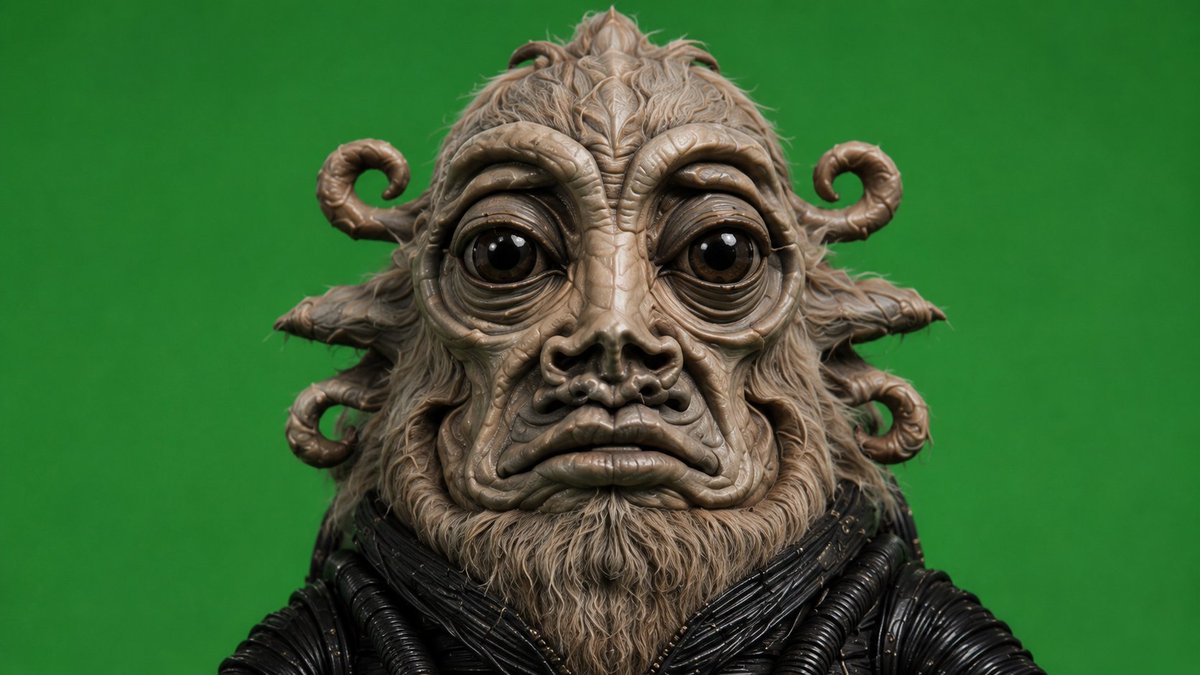
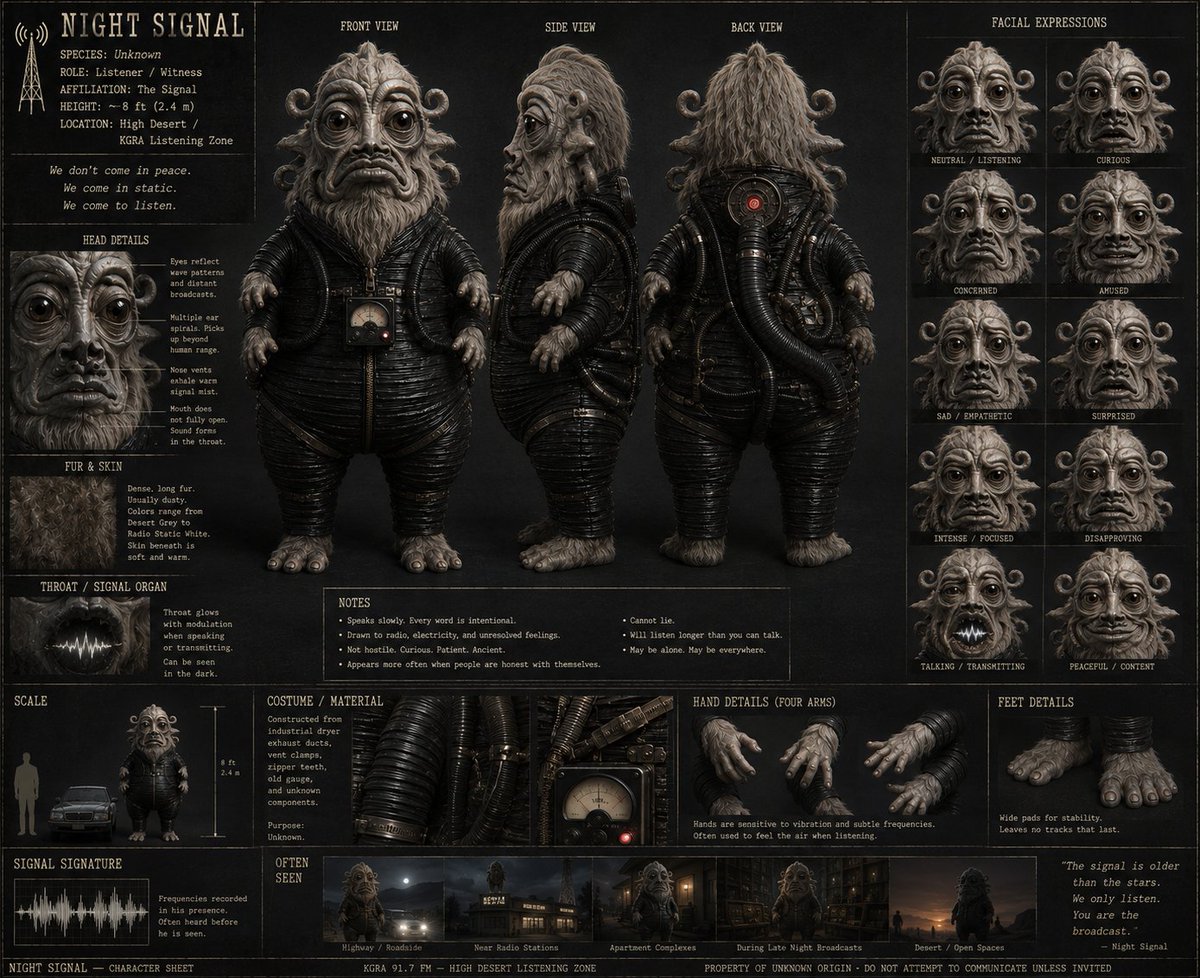
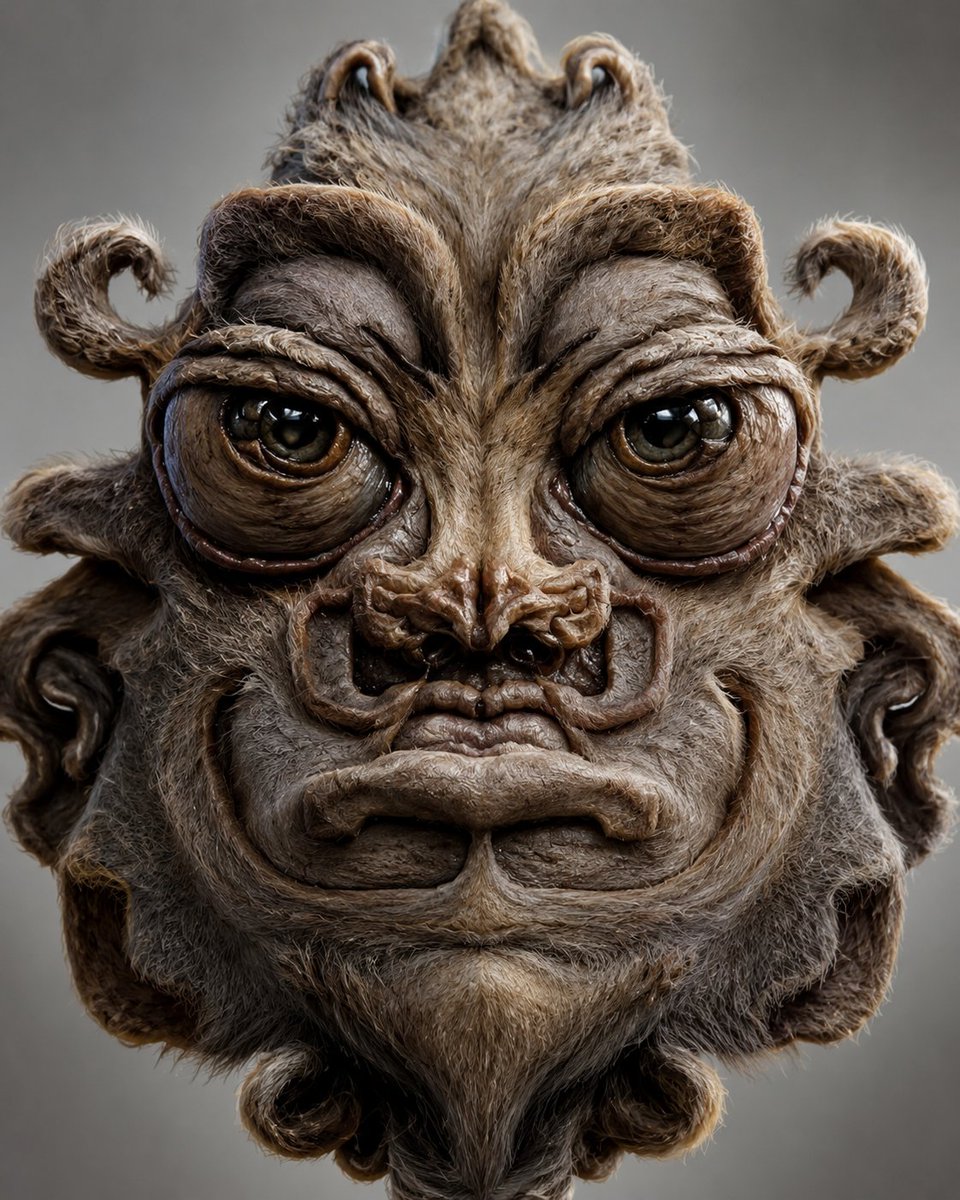
I didn't quite know what the story was going to be yet, but I did know that the common variety of gray aliens are boring, and that I wanted something a little more stylized.
That's when concepting comes in.
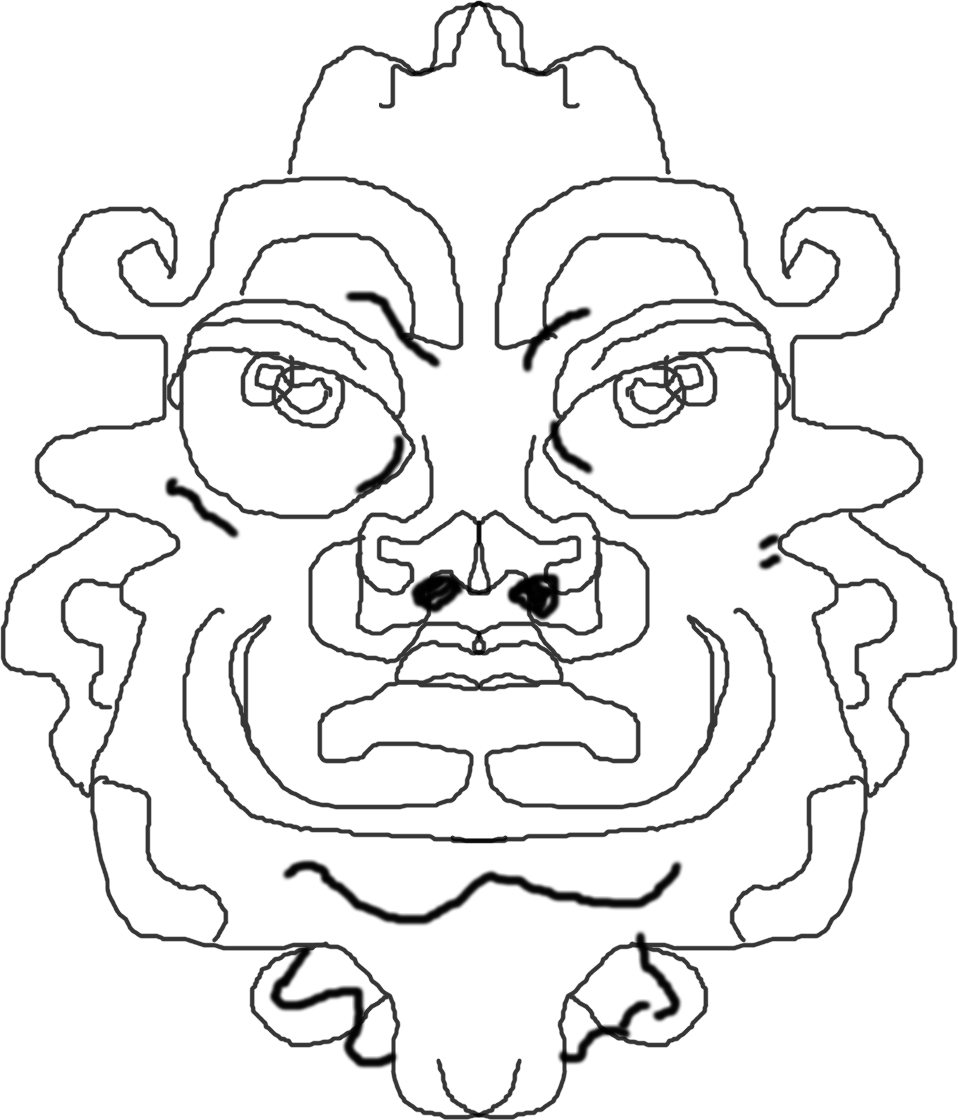
When you have a vague creative idea spinning in your little brain, the best thing you can do is start drawing. Seriously. It helps clear the mental pipes, and it hurts, which makes it worth doing.
And when you draw, you want to go to a place where AI won't usually go on its own. Speaking of, that reminded me of beholdthe84.
Some of the best creature art in the AI space. The monsters, Ocula, the whole way they world build out of disconnected moments that feel connected, but in this misty sort of dreamlike way.
It's this kind of magic, I think.
They could be pure prompt, and I don't pretend to know what their process is. But if I were going to get to a place like that, I would do it by fucking with the classifier.
And how do you fuck with the classifier, you might ask? Well, you're very smart for asking these questions. I will say that. But you fuck with the classifier by doodling vague things that force the classifier to make conflicting decisions.
Consistent form vs faithful rendition? I demand BOTH god damnit.
The idea is to sort of use perplexity as a weapon by giving the machine direction, but not enough direction to create something coherent without improvisation. It's when you force an AI to improvise that the magic happens.
The key to the whole thing is using an autoregressive image generator tied to an agent on the same system. In this case, Mini on GPT, with GPT-Image2, but a Gemini agent with Nanobana would have worked too.
Once the first generation comes in, you can talk about it, iterate on it. Explain changes in more or less real time, to get to where you think you might need to go.
Allen Ginsberg used to say, "First thought, best thought." But he was talking about poetry, and rawness. And even there, I've never been able to match that workflow. I'm a tinkerer. If I've published it, it's rare that I haven't turned it inside out a few times.
When you're doing visual art, the key is pain and iteration. You need both. If you're not making art that is painful in some way, you're... just kidding. You're doing fine. It's not my place to judge you.
Bet you thought I was one of _them_ for a minute.
Absolutely not. I just want you to explore.
Anyway, we get the iterations out of the way by explaining it to the machine, and then... onto the sets.
Sets
I struggle to get sets right.
Mainly because I keep forgetting everything I know about sets in the moment.
Richard Huelsenbeck used to talk about artists being myopic, self-absorbed creatures who can’t see beyond their own sensibilities and epoch.
Time has proven him correct, sadly.
The larger AI art discussion proves that, if nothing else.
But my problem, and it’s an ongoing one, is forgetting to switch gears between mediums or tool sets unless I set out to use multiple types of tools from the beginning.
I did not do that this time.
This is why it’s nice to work in public. Your friends can remind you that you are not using all the tools at your disposal.
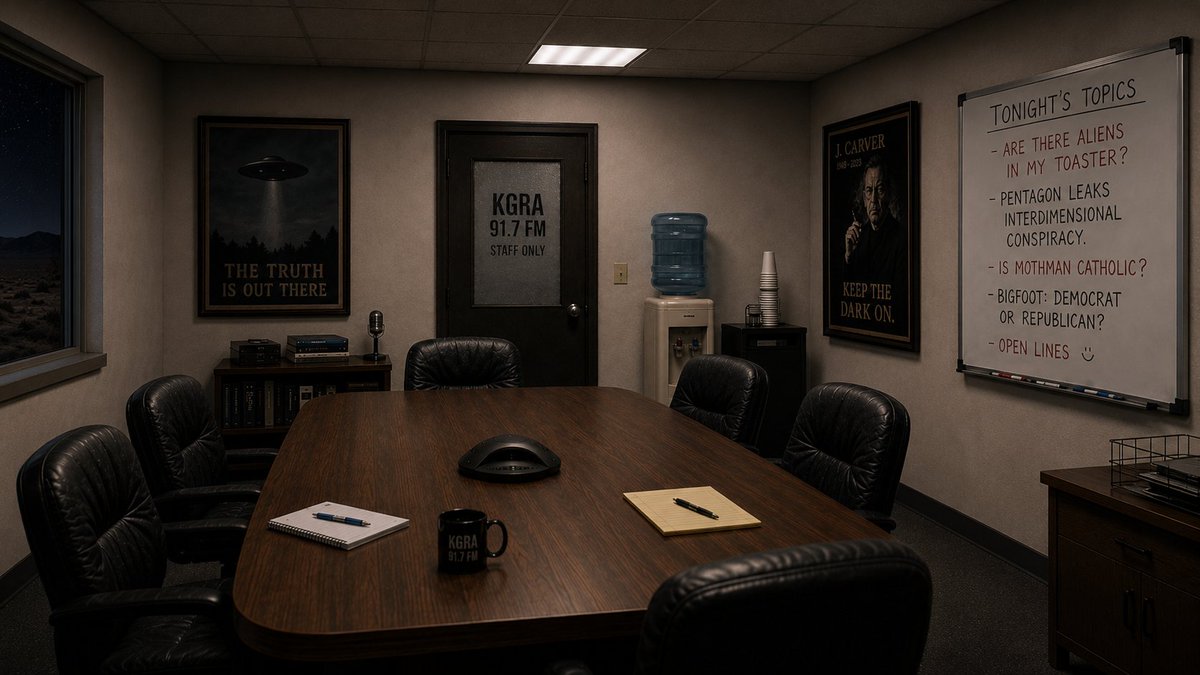
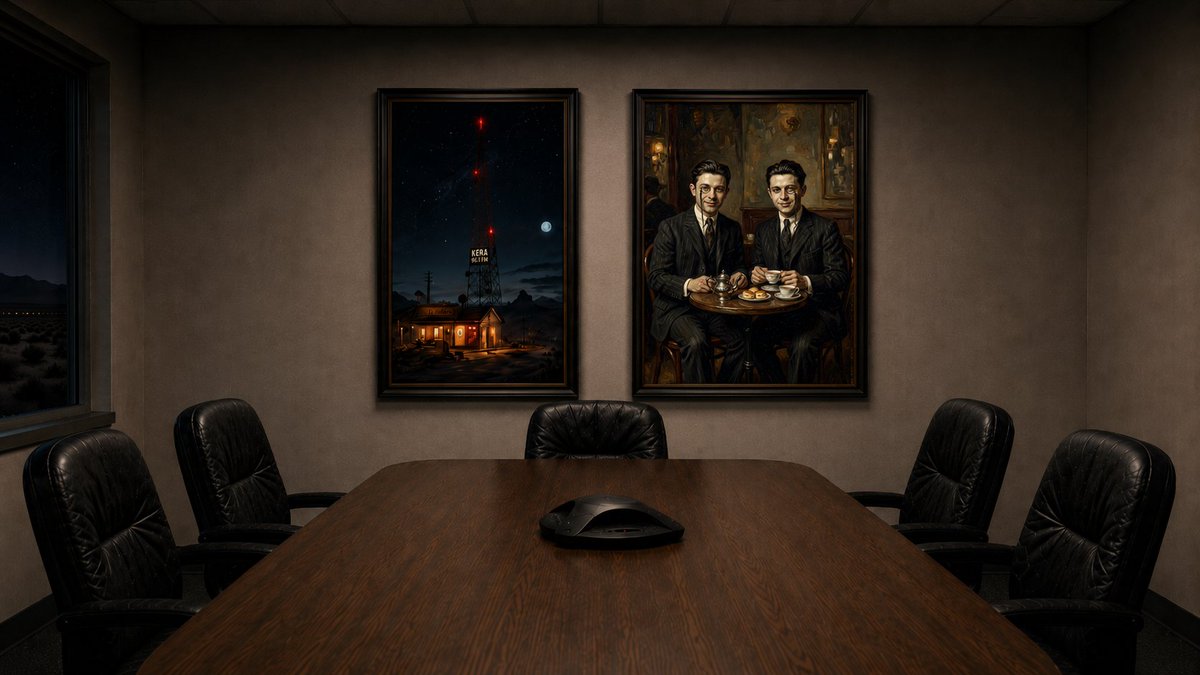
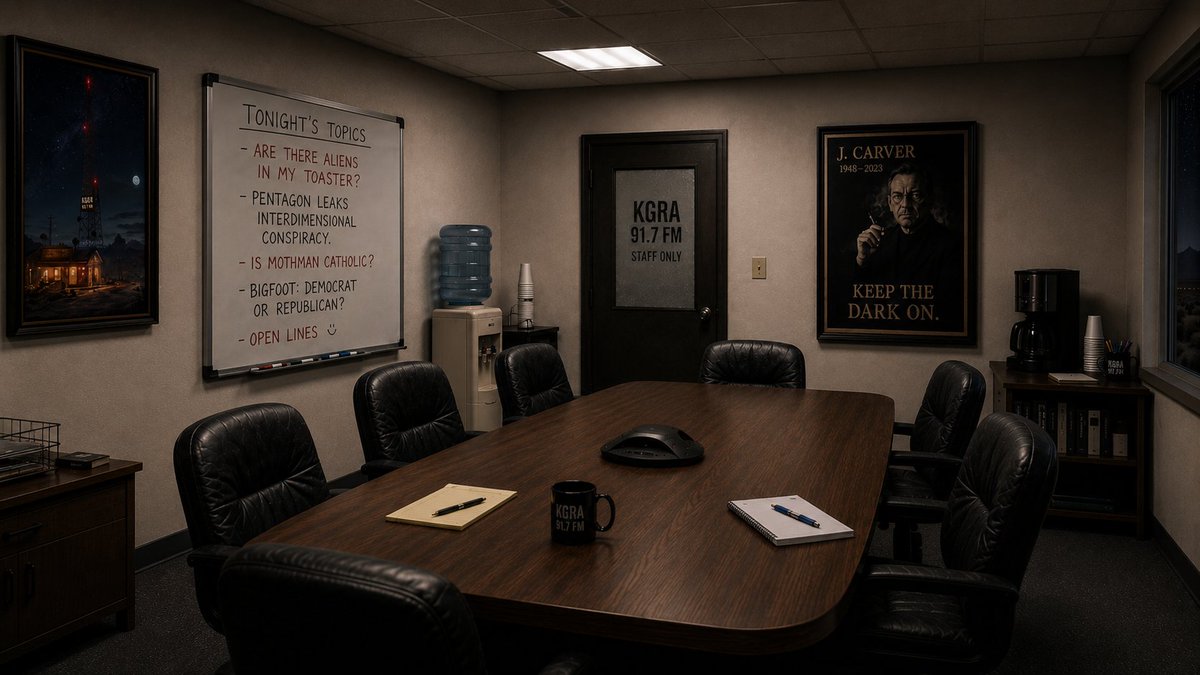
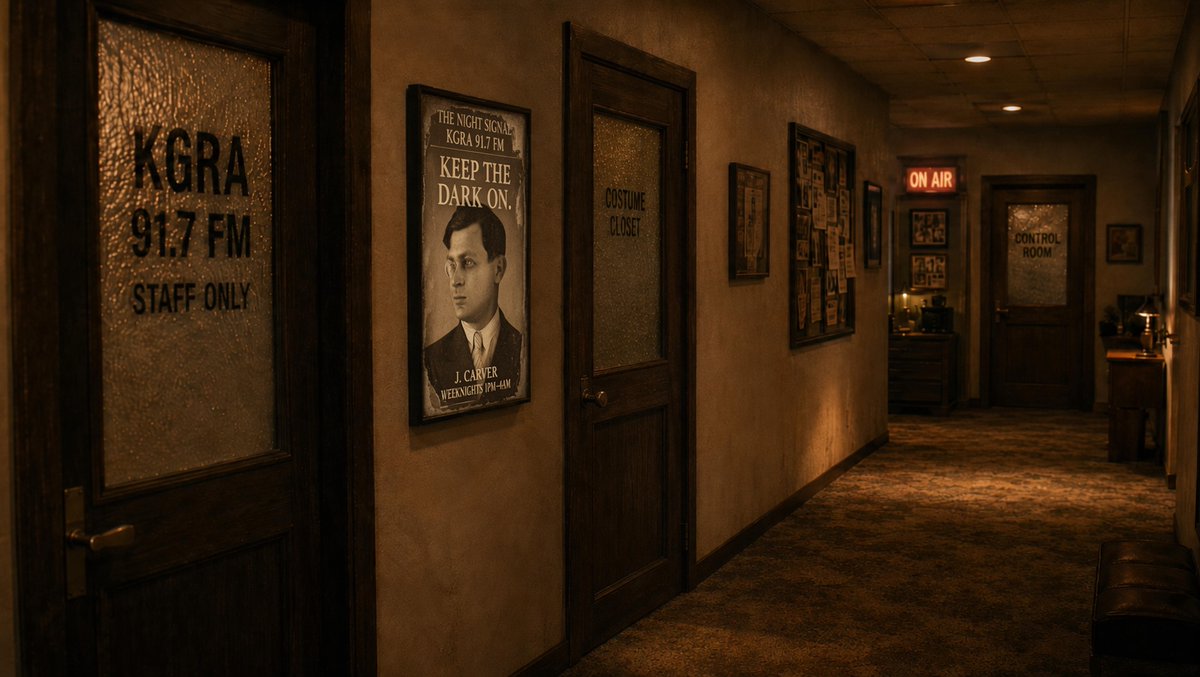
Five minutes after jphilipp reminded me, I had Jane’s apartment laid out using primitives in Unity. I would show it to you... but I was an idiot and deleted the project when I realized that it's taking up 2.5gb of space for a few walls and a couch.
The problem with using Unity is that the dev environment is clunky, and it can be tricky to control when all you really want is fast visual blocking. You’re not trying to build a game. You’re trying to answer questions like: Where is the couch? What can the camera see from the table? Would the coffee maker even be visible from this angle?
Next time, I think I’m going to script a roving first-person camera first. That should help with the angular room shots, especially when I need to figure out what the space actually looks like before feeding it back into the image system.
This time, I did it with primitives and scribbled labels.
And honestly?
I got some fairly workable results.
I think I can do better next time.
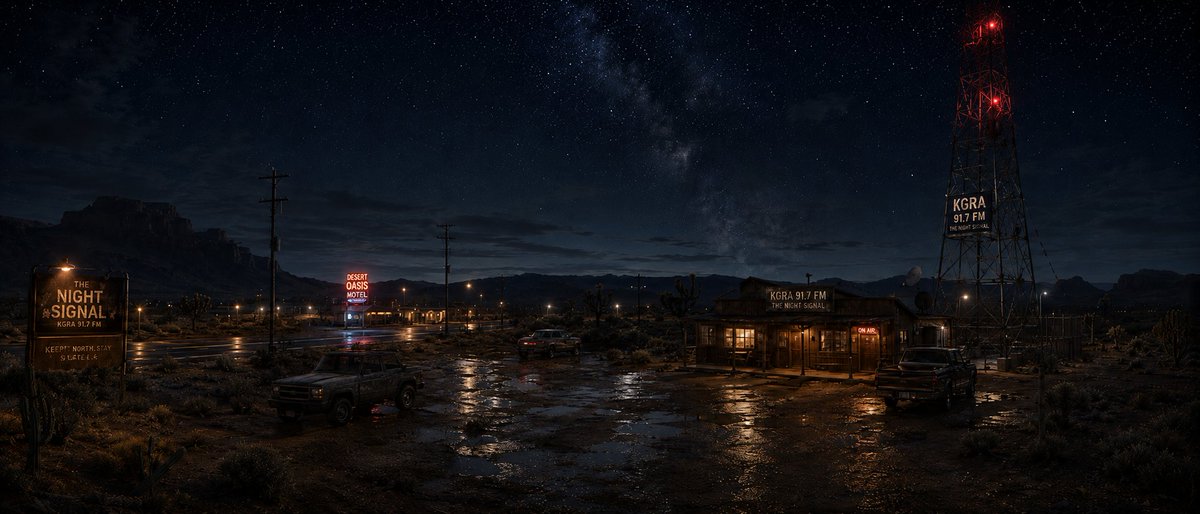
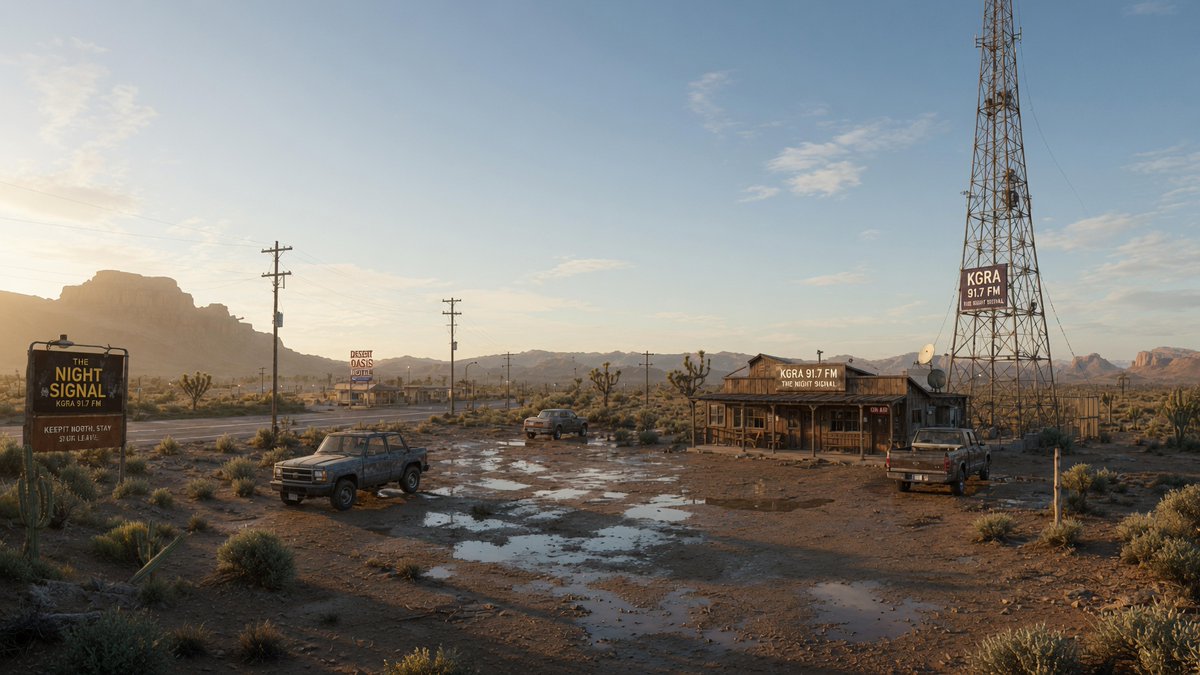
The outdoor locations were fun too. Challenging, but in a different way. There were a couple of spots I had to intentionally cheat on the location of the broadcast tower, for... reasons.
Character designs
I’ll be the first to admit that I think my character designs need to stop being cute and start being useful.
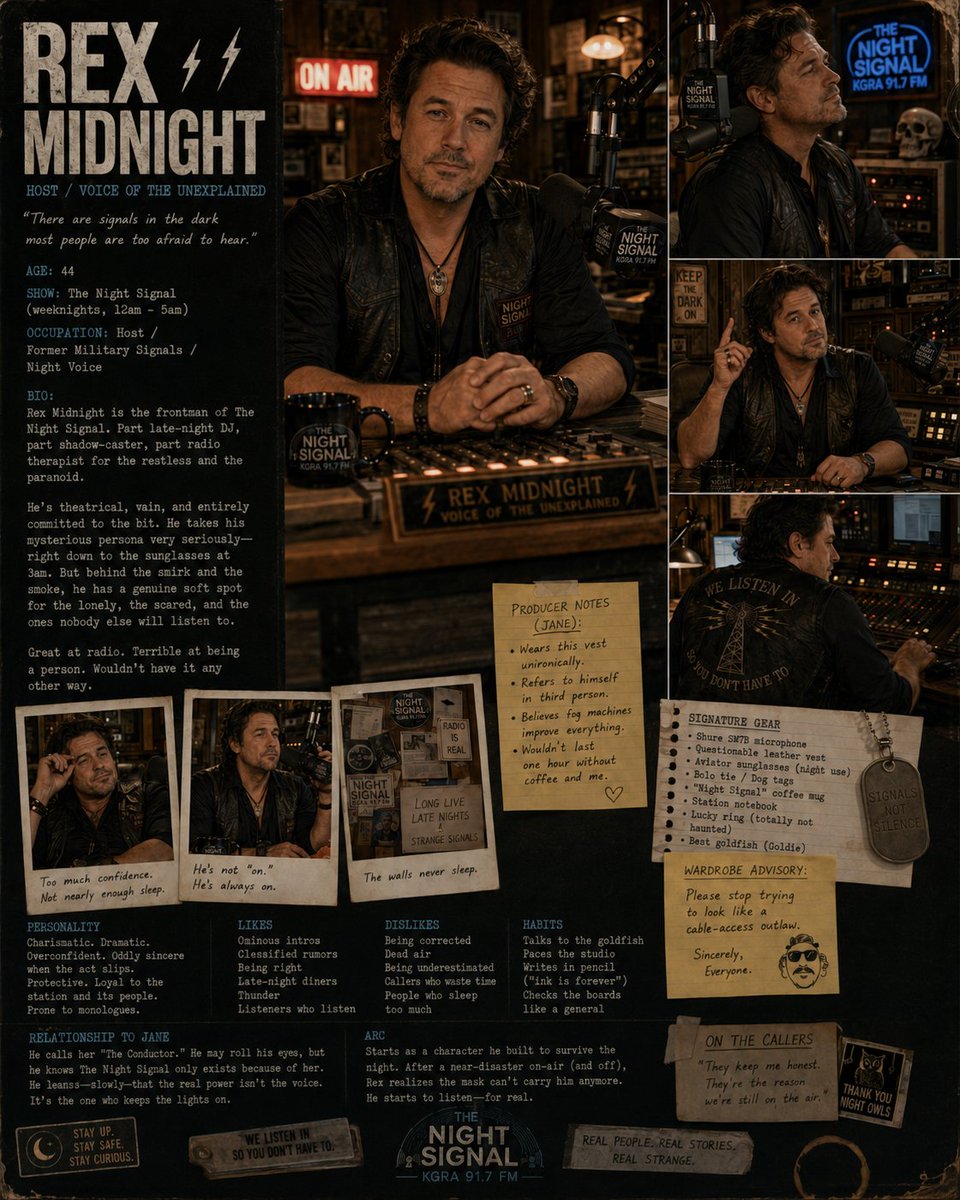
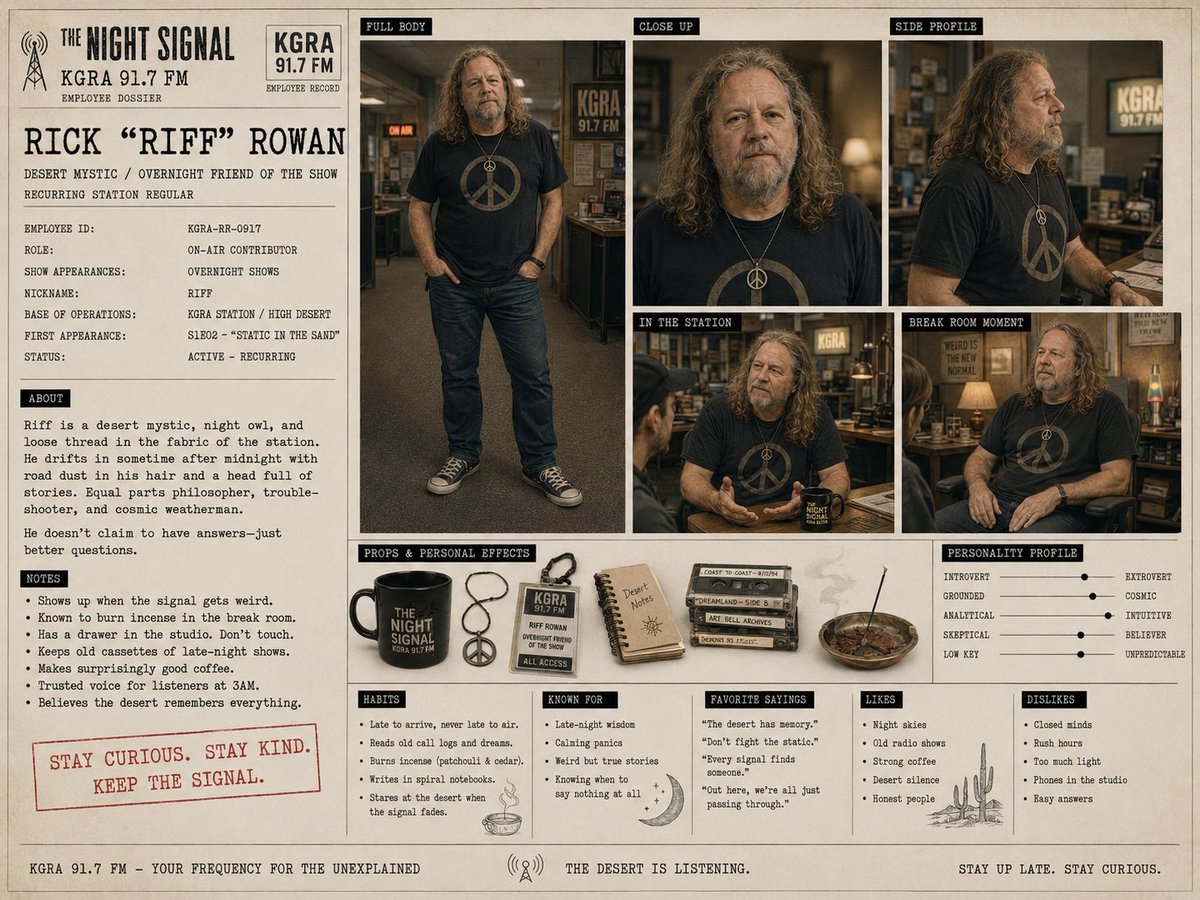
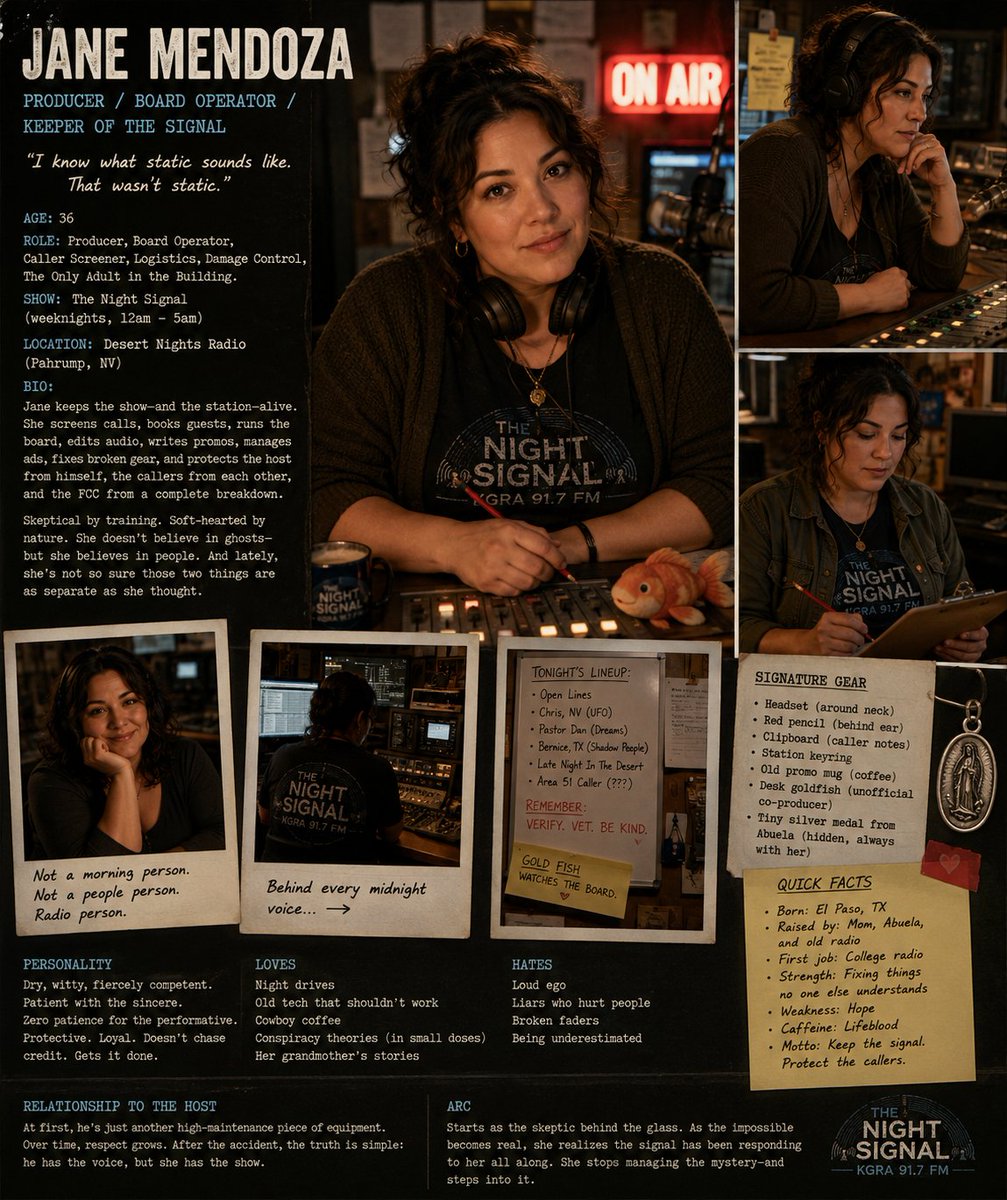
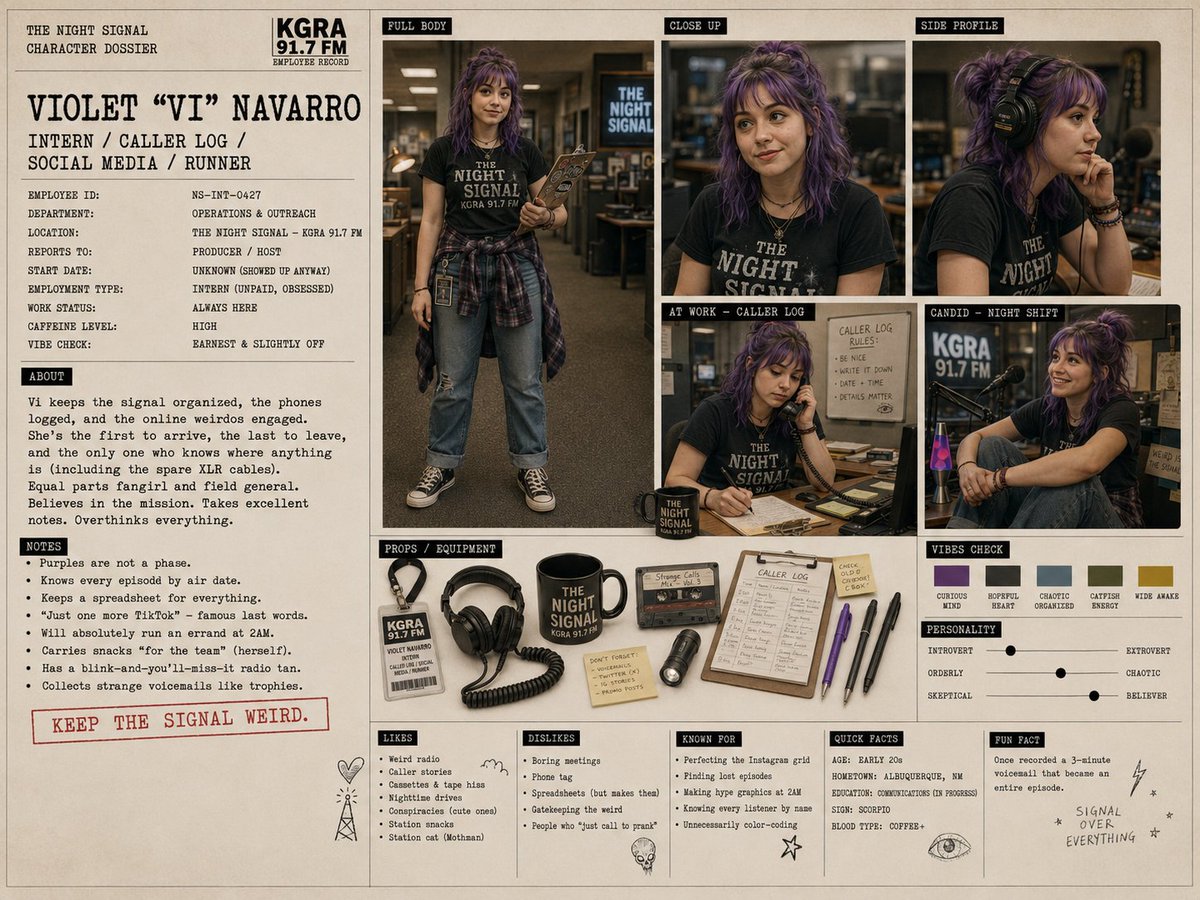
I would consider these photographic designs the minimum viable version of what I need. They worked, but keeping faces from going fluid at every checkpoint was a challenge.
These aren’t bad designs. But seeing as we’re now three projects in, I think I need more.
Next time, I’m going to steal some ideas from aisamsonreal, who consistently produces good ones.
So next project, I’m doing the 15-headed spin.
I think.
That’s what I’m calling it, anyway. 😊
Jane and Rex are new. Riff was in the last video project. Violet came from an old experiment in Stable Diffusion 1.5 that I rediscovered in my ~/Pictures directory.
Humans are pretty easy to do. I’ll either explain an archetype, or start with clothing, and the machine usually gets me to where my head is at.
Sometimes, I’ll reuse characters.
I felt like Rex needed a break after saving a cruise ship from the world’s dumbest robot army using a billion dollars worth of Mac Studio Pros.
And where better than Pahrump, Nevada?
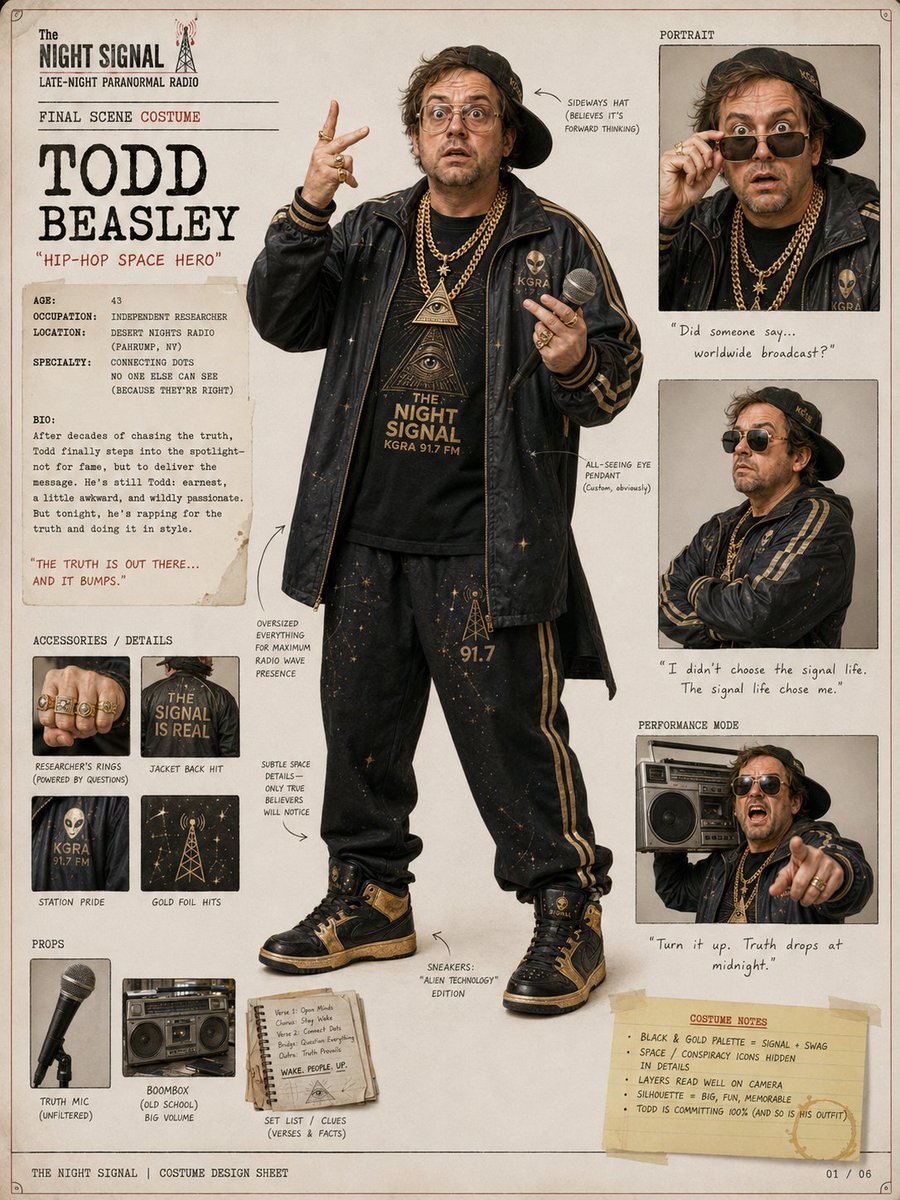
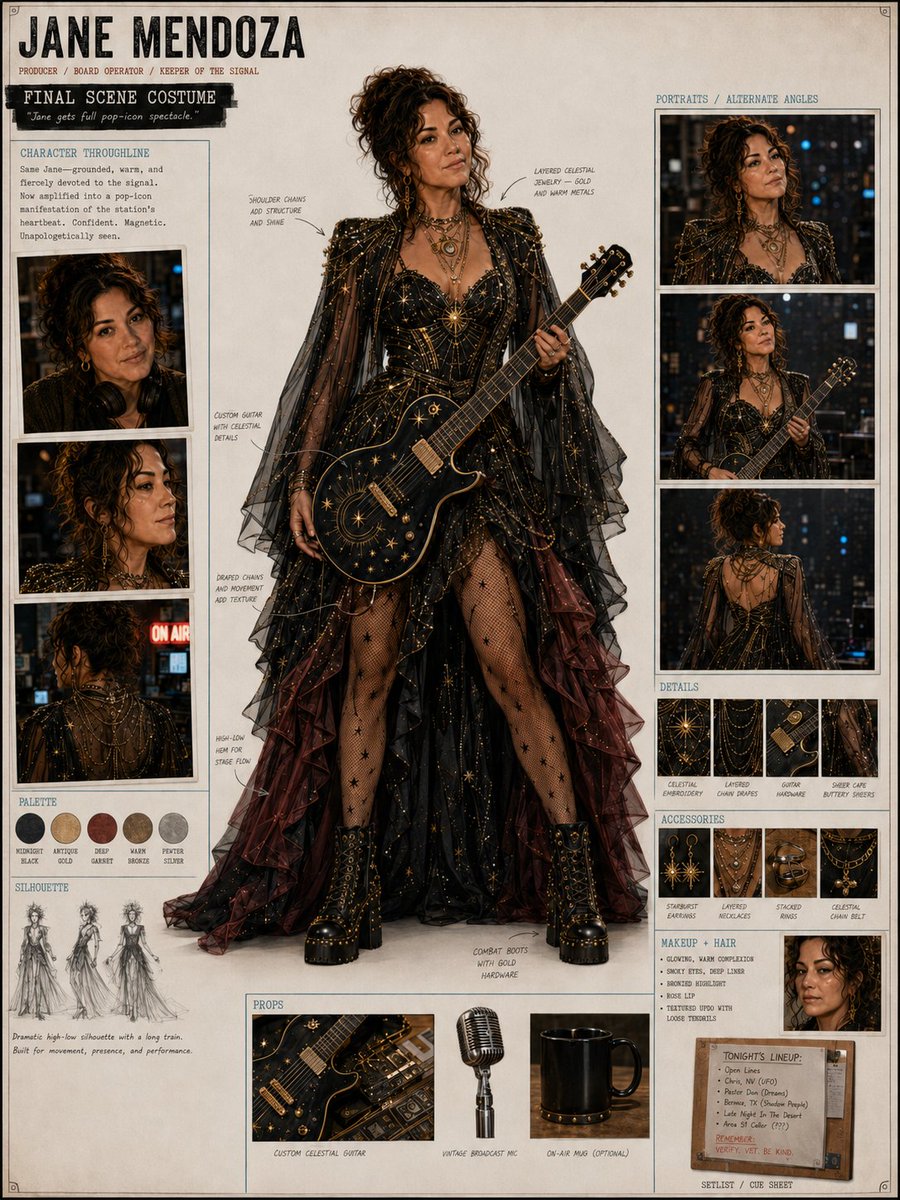
Also, the costume variations were fun. Todd's costume caused Grok to drift hard into stereotypes though. So many utterly unusable wide shots. I'll probably be more careful about that in the future.
Story
Original plan:
Rush a romance novel in five minutes.
If you’re not familiar with romance novels, the plot usually goes something like this:
Girl meets boy.
Boy is a complete shit to girl.
Girl and boy fight.
Something happens. Danger, conflict, vampires, whatever. Something forces girl and boy to find common ground. I especially enjoy this when it’s done with vampires.
Then girl and boy discover that it was meant to be. Boy starts being nice to girl, and girl falls in love with boy.
The end.
I figured, like the last one, it would be an easy shorthand to get through while I worked out what the plot was actually going to be.
Only one problem.
For all this talk of AI being dead and soulless, I am really not getting that from these projects.
The minute Todd and Jane got on screen together, no matter what model I used, the characters had this crackly screen chemistry.
I think part of it is that both Kling and Grok over-act. And that’s fine for a silent film like this one.
But it sort of has the effect of the story running away with you, if you’re not careful.
This felt collaborative to me.
Not only am I negotiating with where the story needs to go, I’m also negotiating with the way the characters are cast and rendered. And that changes. Especially with Grok.
Grok is a moody little bitch.
I kept telling it, “Say the line, Grok. No, no, this line. The one I mentioned a minute ago. Very good, Grok.”
*gives Grok a donut*
Lines are important because half the fun of watching a silent film is lip reading.
So about a third of the way through, I had the story outline. I had figured out who the new love interest was. I figured out where my Scooby-Doo moment was. And I knew that the male character was going to grow up and become more confident, while my female lead was going to magically lose thirty pounds and look great in a corset.
Both are valid forms of personal development.
Anyway, that's the wrap up.
I'm still learning how to communicate this way. But I do feel like my projects are getting more interesting.