This is a noise painting. I've been experimenting with these as a basis for feeding Stable Diffusion. It's less of a standalone piece and more of like a visual instruction set for creating cool art. This should be enough to roughly tell the AI the type of thing to create.
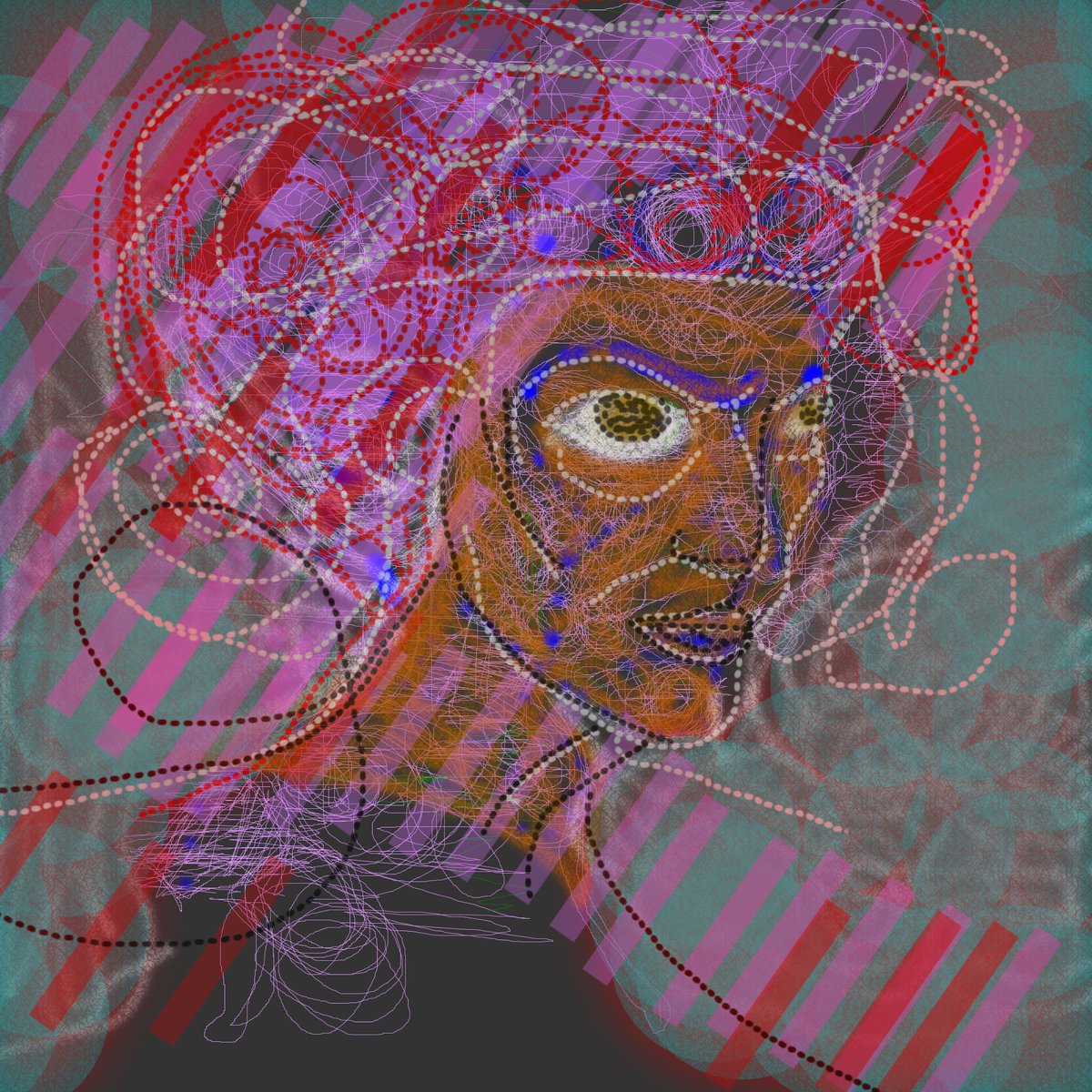
This one has cues for lighting, texture, background, and depth etched into it. And I'm even telling it what kind of brush strokes I'm interested in seeing. Typically, my final product is low noise, but I'm hoping to do this one in layers, so some of the initial noise stays intact.
Anyway, the reason you want to do your AI art this way, at least in a tool like Stable Diffusion, is because without it, you're limited to the words you pick, and influences you call. The machine will create predictable amounts of noise, and remove it in boring predictable ways.
Noise paintings confuse the AI, because it gives the system a less predictable starting point, and it can generate component pieces that either no reference exists for, or reference segments from unexpected places. Do it right, and it looks amazing. There is no wrong.
I'll render this out later. But if you're an SD user, feel free to render it against any prompt you want. Put it at low noise, and watch the magic happen. It's pretty cool.
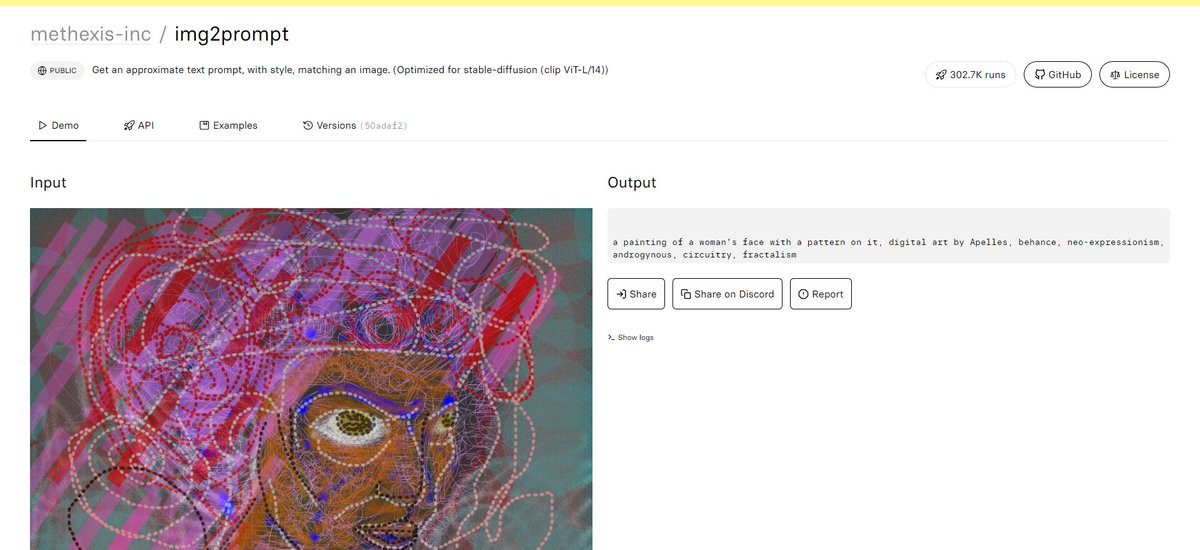
Now, let's see what Mexis has to say about it. Yep, way off. This is a good sign.
Prompt: a beautiful woman looking at the moon.
Negative prompt: masculine, androgynous
De-noise: 0.25
Seed: 2420851800
Using the public domain pulpart diffusion checkpoint
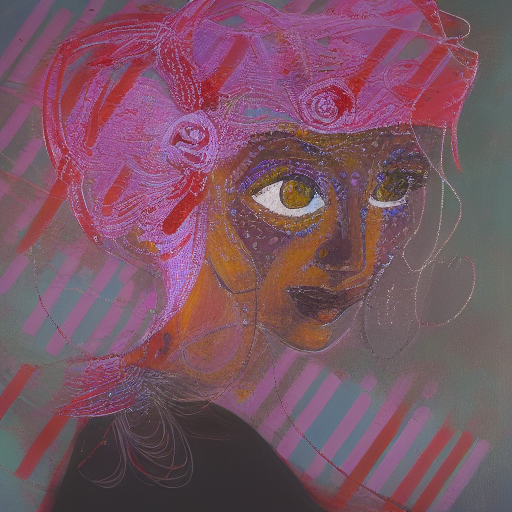
de-noise at 0.35
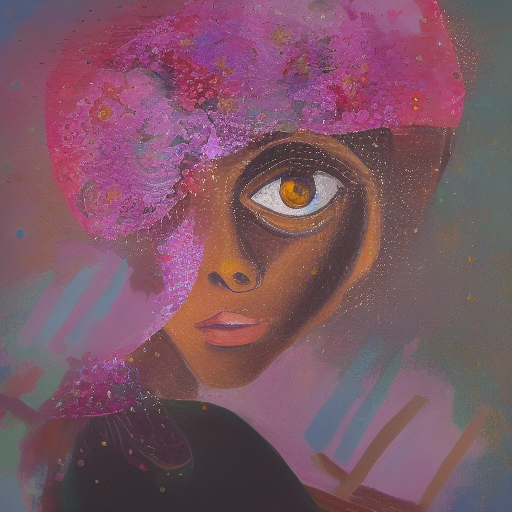
De-noise at 0.45
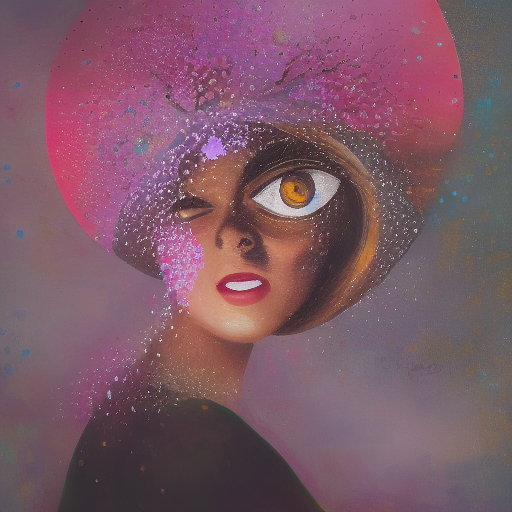
cfg/distance at 18.5
de-noise at 0.49
I'm actually happy with this
Anyway, you get the idea
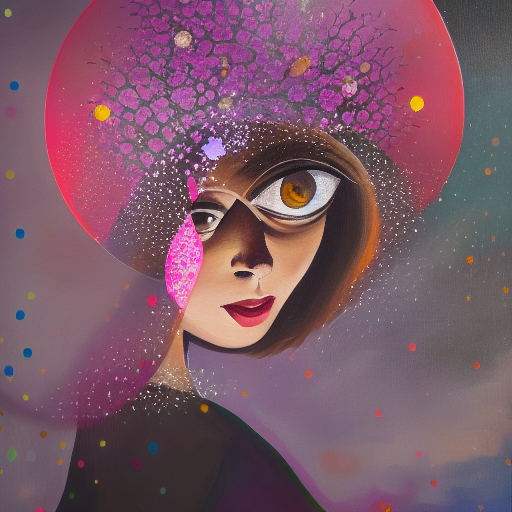
Evolving the reference
The other way you can approach this is with evolution. Change the reference, and apply it as correction. Let's try that real quick. Keeping the settings the same, we're going to take our first output, and run it through at these exact settings from the last one.
When you do that, the first thing that comes out is this piece. Super pretty, but I want more. Let's run a grid of them and see what visualization options we have.
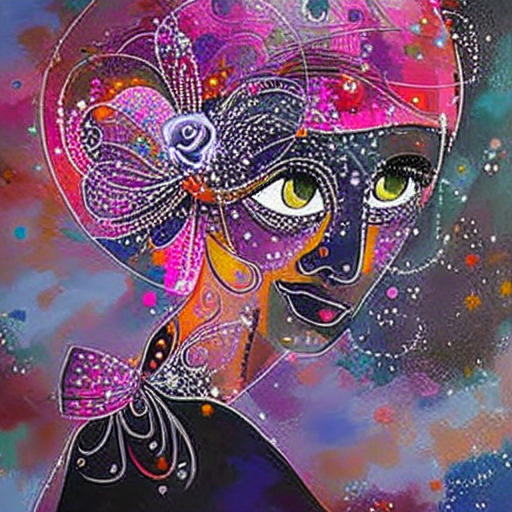
What this tells me, all the way up until the last one, which got signed by the great Gil Elvgren, despite not even being close to his art style, is that there's too much distance in these. At least all the way until the end, where it got the last one perfect.
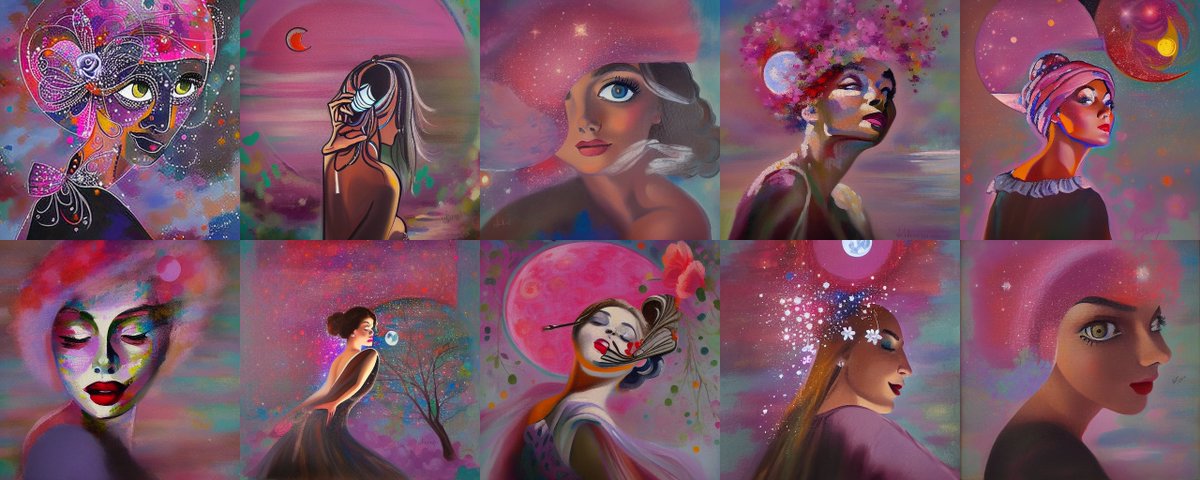
Pretty. Now, honestly, I would stop here, I think. If I were creating a piece that I wanted to use. It's got texture, it's got noise, it still preserves my original composition... but if I were going to evolve this a little, I could. Let's do one more round by switching the ref.
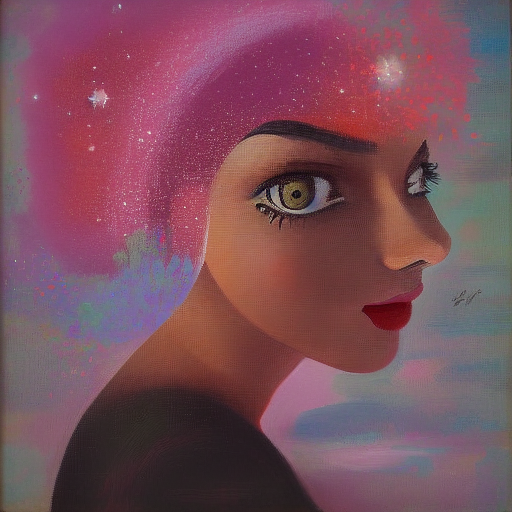
This is a little too clean at 0.25 noise. Honestly, I think this one should be a little rough, a little painterly. So we keep the last ref, and call it a finished piece 🙂 but wait... there's more. See, the depth targets still need to be corrected.
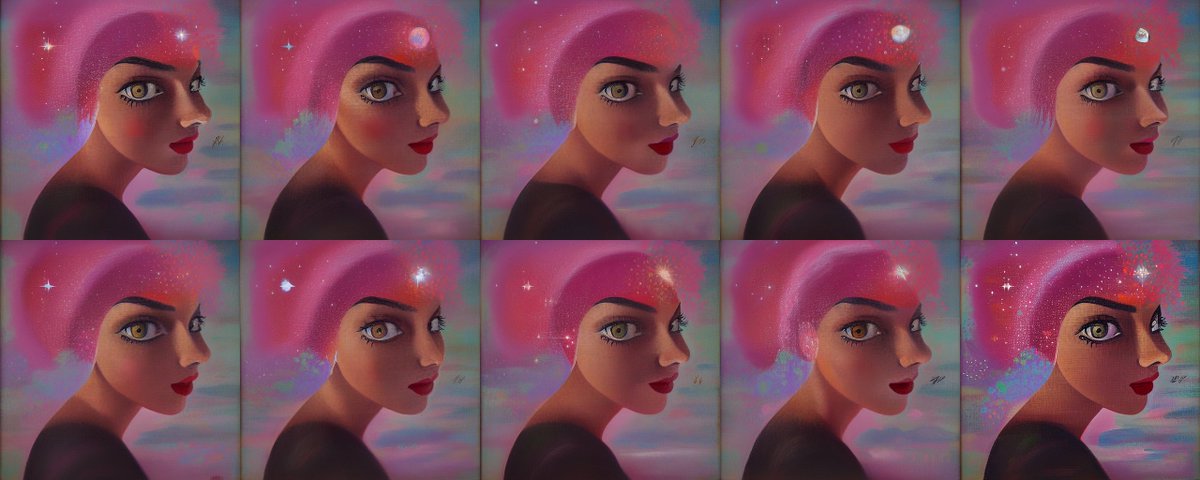
Upscaling and the final piece
When upscaling, it turns out this is too much background radiation for skunet. So it goes a little cray with the background texture.
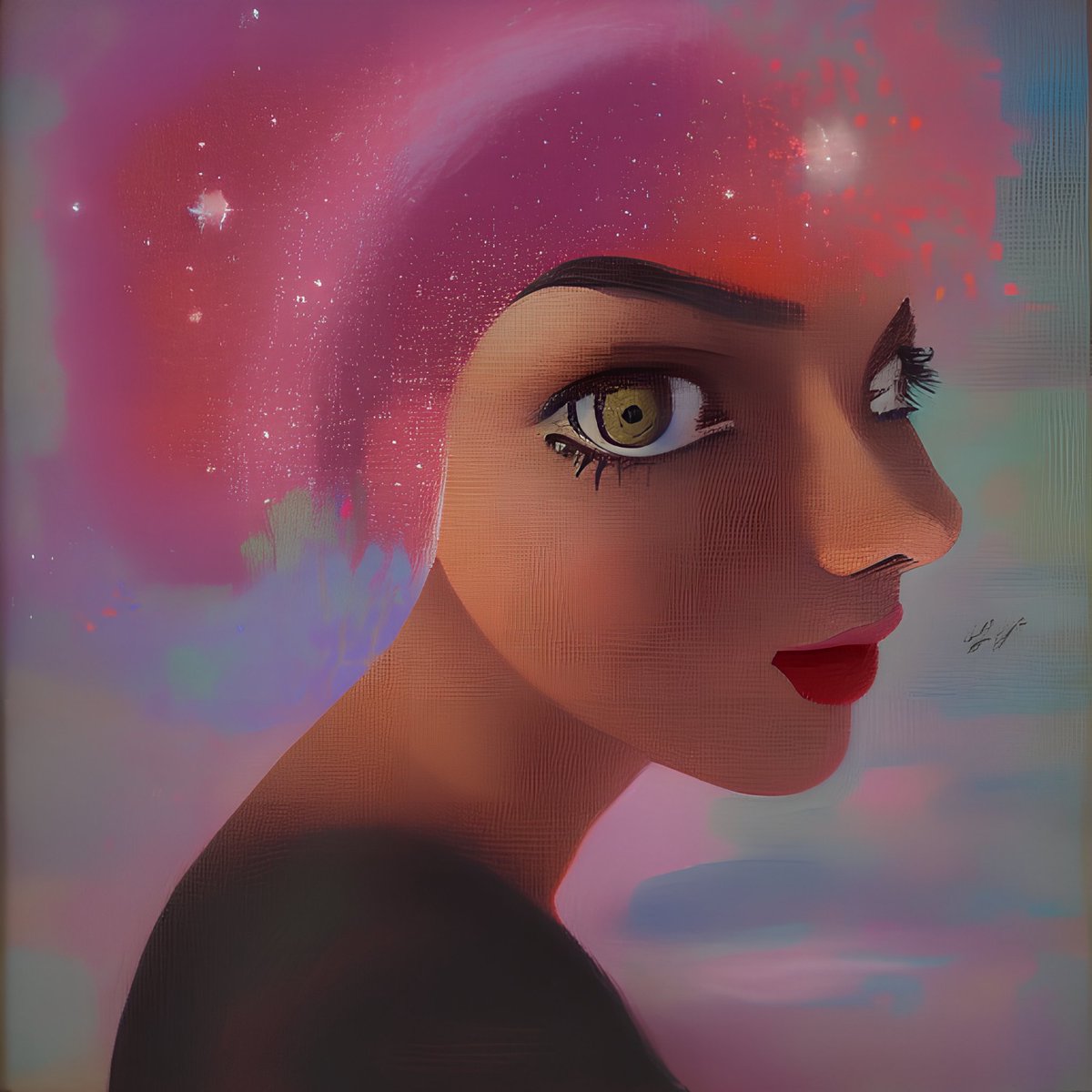
Oops, not scunet, SwirIR, these names are messed up. ESRGan actually gives us something interesting, but it's not different enough to post. A single round of scunet gives our final piece.
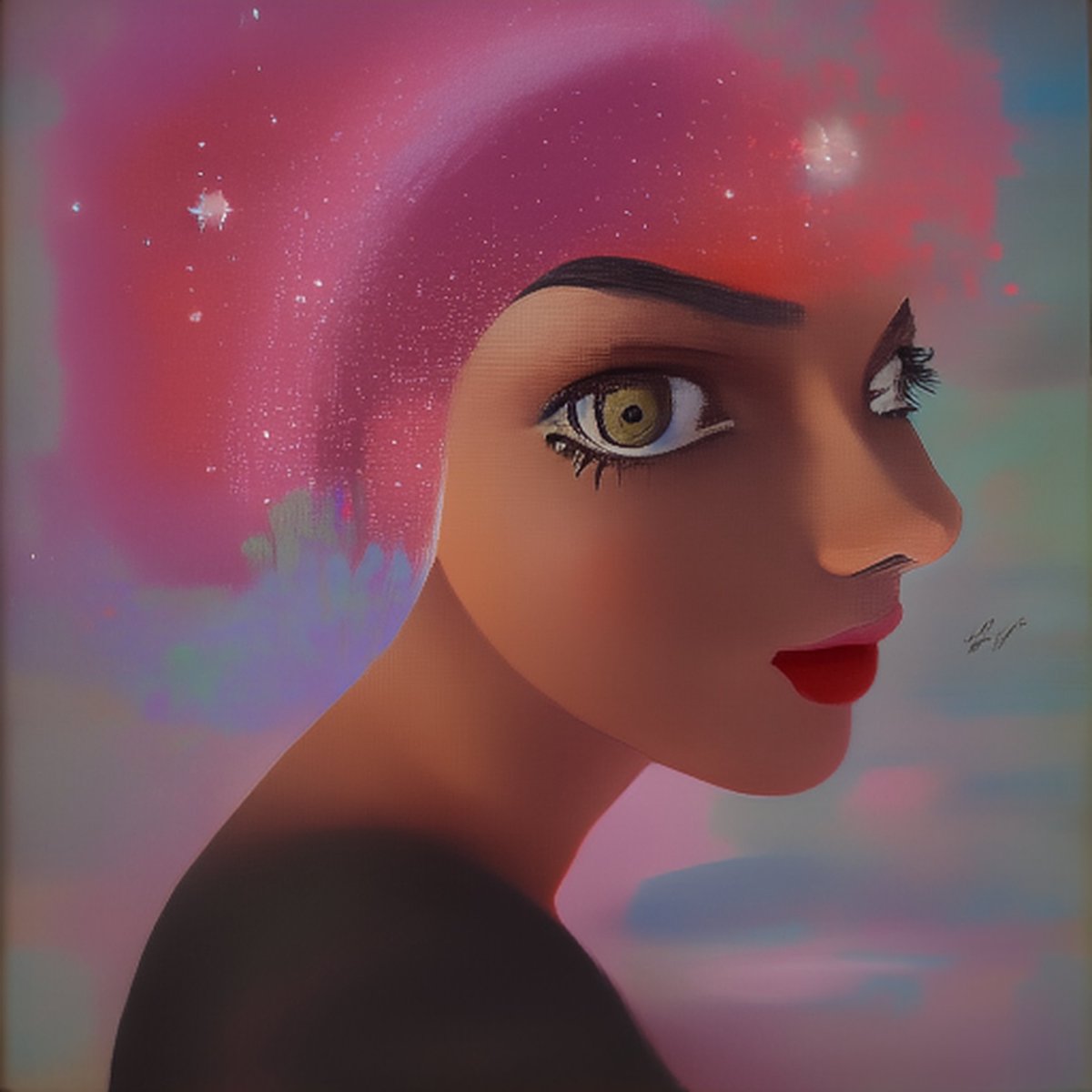
But aren't you curious about what the interrogator has to say about it now? I am! Let's take a lookie.
Wow, cool comparison. Also, mind you, this was done entirely with ethically sourced public domain references.
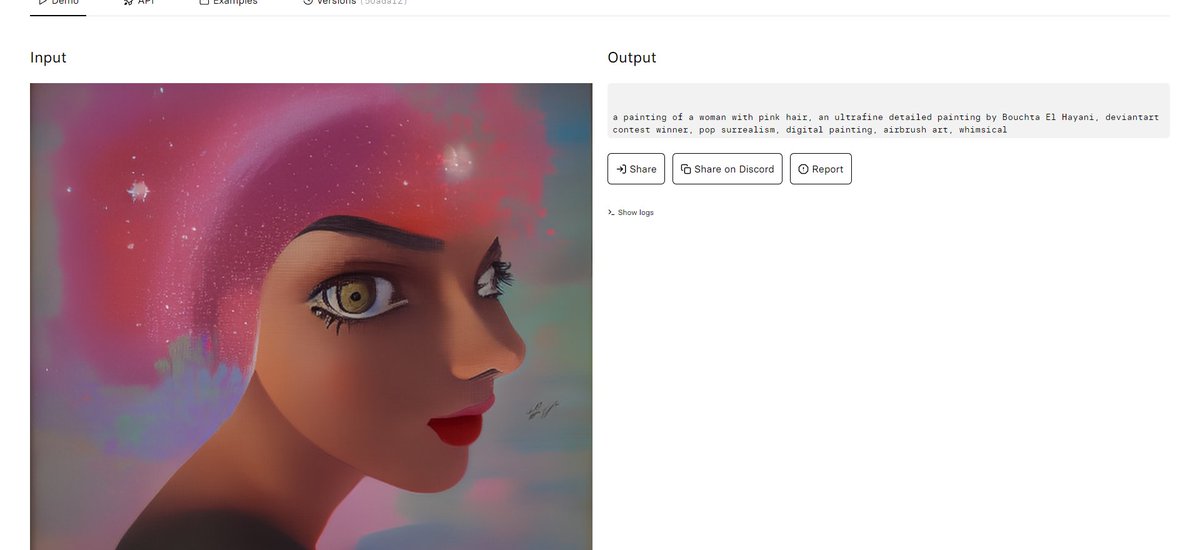
I could probably clean this up in Photoshop a little, but that's the gist of it. Adding noise and unpredictability to your inputs gets you some really dynamic compositions that break composite art styles, and force the machine to do unexpected but predictable things.
You can use techniques like this to modernize old art styles, create entirely new ones, or make those chunky textures that a lot of AI artists use to make dynamic looking art. I'm just here to explore the possibilities of the creative frontier.